Pressure Converter
Convert pascals, kilopascals, bar, standard atmospheres and psi. 1 atm is exactly 101,325 Pa, 1 bar is 100,000 Pa, and 1 psi is about 6,894.76 Pa.
FluffyShield Protected workspace
Convert pascals, kilopascals, bar, standard atmospheres and psi. 1 atm is exactly 101,325 Pa, 1 bar is 100,000 Pa, and 1 psi is about 6,894.76 Pa.
Tire gauge in psi, manual in kPa? FluffyBench's Pressure Converter gives you the same pressure in the unit you need, as you type. Copy the number, then keep the reading's gauge or absolute label beside it.
Pa, kPa, bar, atm and psi.
Decimals, negatives and 1e6-style numbers work.
Your number is converted in your browser, with no conversion request.
Limits Type the number alone; its unit goes in From.
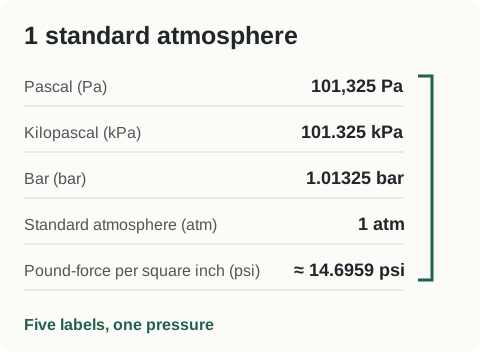
Pressure is a push spread over an area. Converting it is like giving a distance in miles or kilometers: the number and the label change, but the push stays the same. Here's one standard atmosphere written in each of the five units FluffyBench offers.
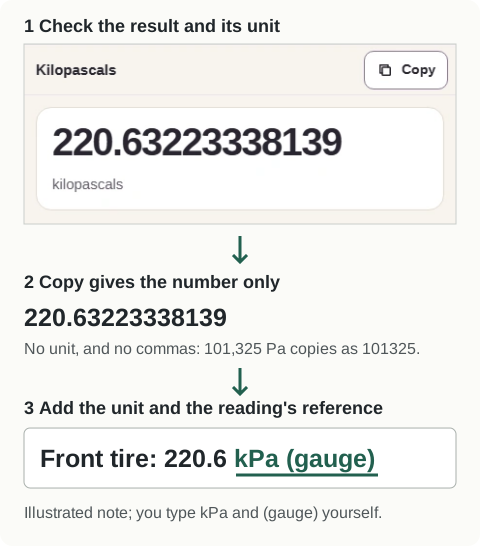
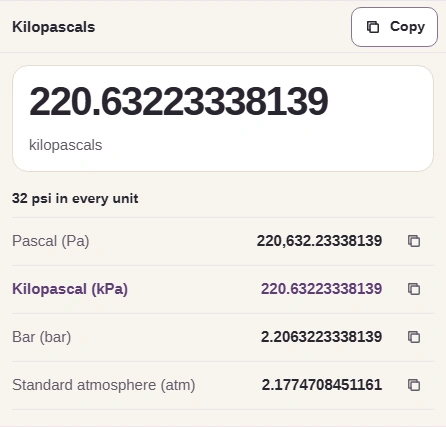
Here's a tire reading of 32 psi converted to kilopascals, from choosing the units to copying the answer.
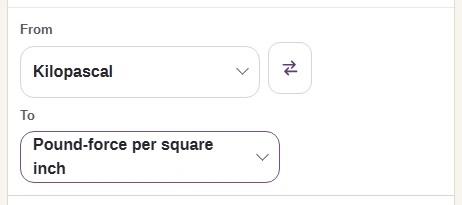

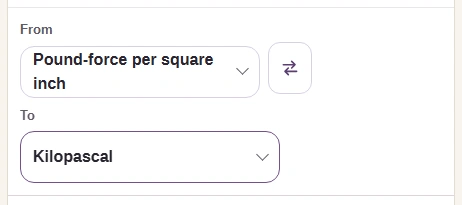

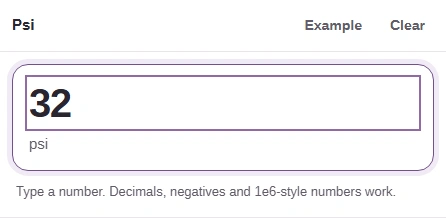
If FluffyBench asks for a decimal number, type the number by itself, without a unit or commas. If Copy is unavailable, select the result and copy it yourself.
A tire gauge counts from the air around it. That's gauge pressure, written psi(g). Absolute pressure counts from zero, so it includes the air too, written psi(a).
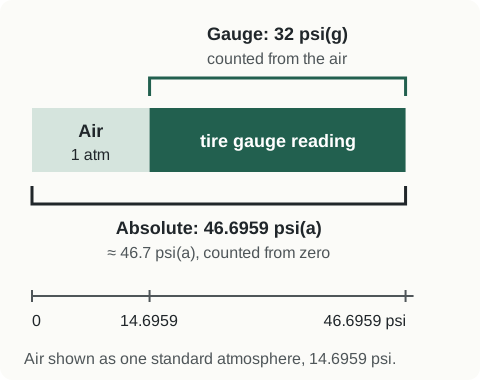
The air in that picture is one standard atmosphere, a fixed unit of 101,325 Pa. Real air pressure shifts with weather and altitude, so treat it as a stand-in, not today's reading.
FluffyBench's Pressure Converter changes only the unit: 32 psi(g) becomes about 220.6 kPa, still gauge. It doesn't add the air or work out which kind of reading you have, so take that label from the gauge, manual or spec sheet.
Copy gives you the number alone, so the unit and the gauge or absolute label are yours to add. A form field already labeled kPa needs just the number; a note or a message needs both labels beside it.